
As winter approaches, having a strong online presence becomes increasingly important for businesses in Derby. With fewer people out and about during the colder months, more customers turn to Google to find local services, book appointments or shop for Christmas gifts. Whether they’re looking for a plumber, a dentist or a local retailer, they’re likely to choose a business that’s easy to find online and has a website they can trust. If your business isn’t showing up in search results, or your website is looking a little dated, you could be missing out on valuable enquiries. In this article, we’ll look at why your online presence matters during the winter months, which improvements are worth prioritising and some of the common mistakes local businesses should avoid.
| Key Insight | Explanation |
|---|---|
| Your Google Business Profile is your winter shopfront | Update opening hours, holiday closures and job photos before December so customers do not arrive at a closed door or find a listing that looks abandoned. |
| Winter enquiries mostly come from phones | Test your phone number and contact form on a mid-range phone. If a visitor has to pinch and zoom to find the button, the enquiry is probably lost. |
| Local searches need town-level pages | Pages covering Derby, Ilkeston and the wider Derbyshire area, each with unique detail, beat one generic page that claims to cover the whole country. |
| Paid ads and organic work do different jobs | Sponsored ads can fill a short gap in enquiries within days. Organic visibility keeps you found after the budget stops, so plan for both. |
| Tradespeople need dated proof of work | Photos of finished roofs, boilers or gutters, captioned with the town and the problem solved, persuade more visitors than stock imagery or generic claims. |
| Start reviews and content work in November | New pages and fresh reviews take weeks to be crawled and to build trust, so firms that start in late December miss most of the seasonal demand. |
Winter does not reduce demand for most local services. It changes when people look for them and how they decide. Heating faults, damp patches, blocked gutters and last-minute gift ideas all push people toward search engines, often in the evening and often on a phone.
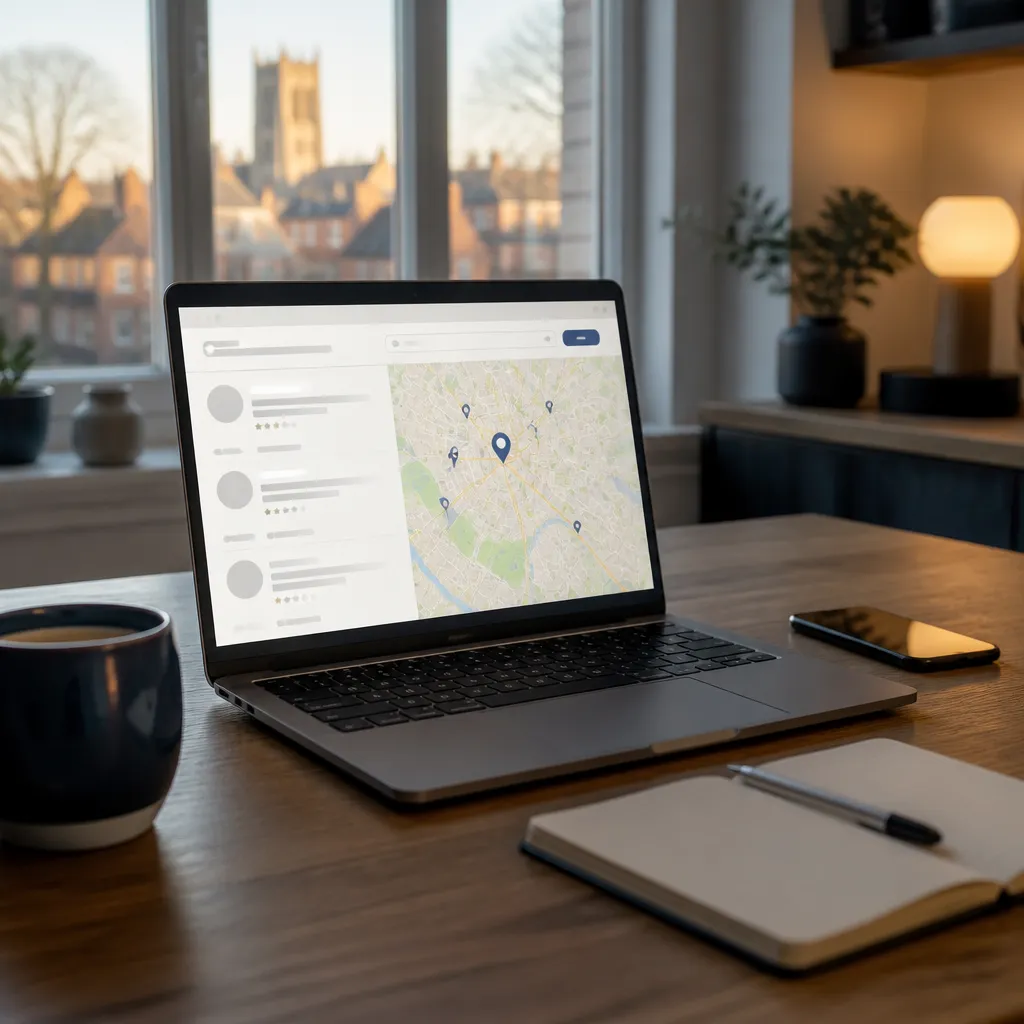
Most of the urgent searches I see happen outside office hours. Someone with a cold radiator or a leaking flat roof does not wait until Monday to look for help. They search, compare two or three firms, and send an enquiry before going to bed. If your website only answers questions during working hours, you are invisible for the part of the day when decisions get made.
A contact form that replies within one working day is perfectly reasonable, but say so on the page. Visitors who see an honest response time are far more willing to wait than visitors who hear nothing and move on.
Weather drives bursts of demand. A sudden frost or a week of heavy rain can flood a local trade with calls in a few days, and the firms that appear first, with clear and trustworthy pages, pick up most of that work. Firms that appear later, or whose pages look dated, rarely win the job back.
Preparing before the weather turns is cheaper than scrambling afterwards. Check that your key service pages load quickly and name the towns you cover, because those are the words people type when a problem suddenly becomes urgent.
For a local firm, the Google Business Profile is often the first thing a customer sees, sometimes before the website. Winter makes its accuracy more important. Opening hours that were not updated for the Christmas period send people to a locked door, and a profile with few recent photos looks like a business that has stopped trading.
Review your categories, service list and opening hours before December arrives. Add a holiday hours note in late November and update it as dates are confirmed, rather than leaving customers to guess what you are doing over the festive period.
Reviews are the thing I see neglected most often in the quieter months. A tradesperson finishes a job in November, the customer is happy, and nobody asks for a review. Six weeks later the memory has faded. Ask for a review at the point of handover, with a direct link, and you will have a steady stream going into the new year rather than a gap.
Local visibility tends to follow the businesses that keep their information accurate and their customers talking, not the ones with the cleverest slogans.
Generic stock photos do little for trust. A dated photo of a finished gutter repair on a Derby street, or a boiler installation in an Ilkeston kitchen, tells a visitor that the business is active and genuinely local. Upload new images every month and make sure they match the services listed on your profile.
Pro tip: Set a calendar reminder for the first Monday of each month to post one recent job photo and reply to any outstanding reviews. It takes about twenty minutes and keeps the profile looking active through the quiet season.
Local search rewards specificity. A single page that says “we serve the UK” gives Google little reason to show your firm for “boiler service Ilkeston” or “roofer near Derby”. Pages that name the places you work, describe the jobs you do there, and show real project details give both search engines and customers a clearer signal.
A town page should never be a copied template with the place name swapped. Describe the types of property common in the area, the jobs you have completed there, and how the work is typically scheduled. For a business based in Derby, separate pages for Ilkeston and the wider Derbyshire area can work well, provided each one has unique text. Thin, duplicated pages do more harm than good.
Your business name, address and phone number should match across your website, your Google Business Profile and any directories where you appear. Inconsistent details confuse search engines and make customers less willing to trust what they find. Audit them once a quarter and fix mismatches rather than adding more listings.
Internal links help too. Connect your service pages to the relevant town page, and link related blog content back to your most important service so visitors and search engines can follow the path from information to enquiry. If you are unsure where to start, the Andy Morley SEO team can map out local pages for your specific trade.
Sponsored ads and organic search are often presented as rivals. In winter they work best as a pair. Google Ads can put your firm in front of people within days of launch, which helps when a cold snap or a seasonal offer creates a short window. Organic visibility, built from your website, reviews and local pages, keeps you found once the budget stops.
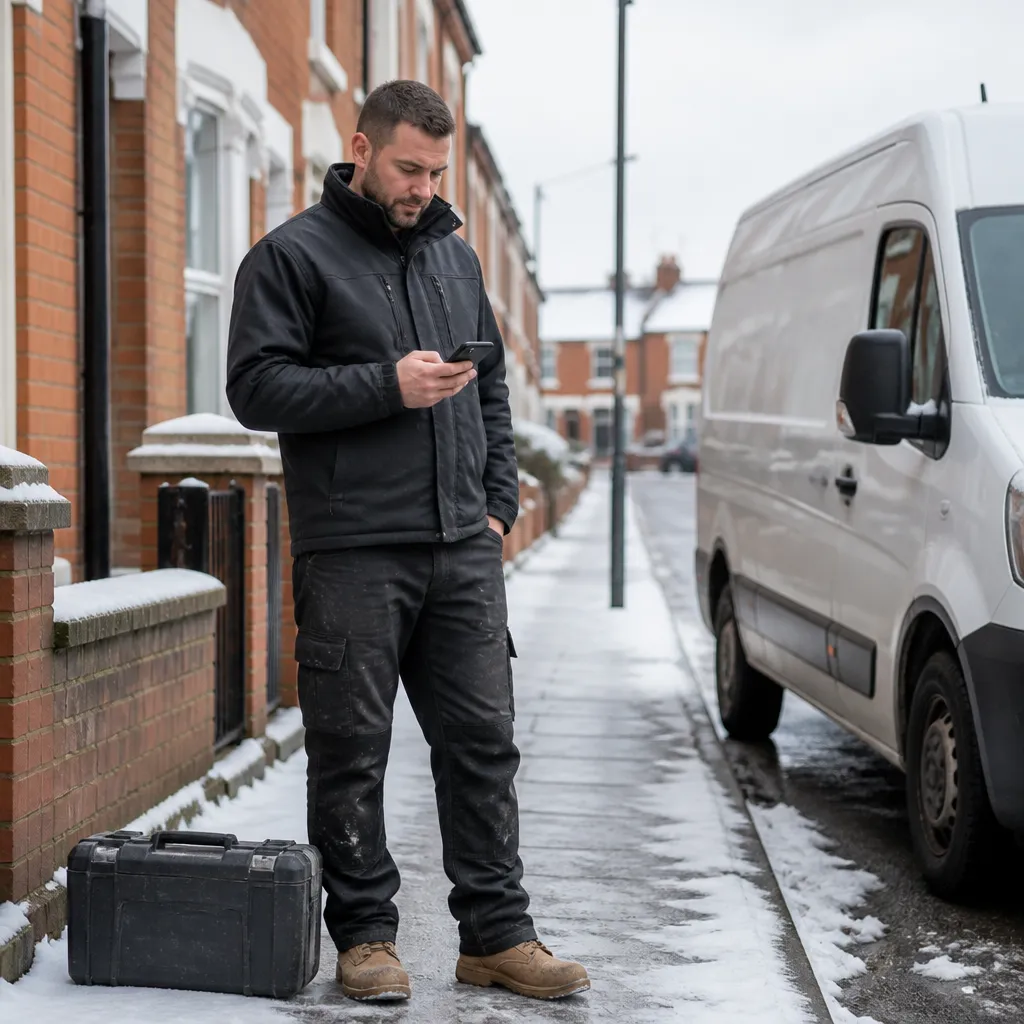
Paid campaigns are most useful when the offer is clear and the budget covers a defined period. A tradesperson promoting an urgent heating visit within a set area can measure cost per enquiry in the first fortnight and adjust. Facebook Ads can also work for consumer services that benefit from visual proof, such as drone roof photography, but only if the landing page loads quickly and matches the advert.
The most common mistake is sending paid traffic to the homepage. A visitor who clicked a specific offer should land on a page that repeats that offer, shows a phone number and makes the next step obvious. Without that, you pay for clicks that leave within seconds. Fix the page first, then increase spend.
Organic work pays back differently. A well-structured page can keep bringing in enquiries for months, but it takes time to be crawled, indexed and trusted. That is why starting in November matters. You are building the foundation that will carry you into the new year.
Before spending money, decide which route fits your margins and timescale. The table below compares three approaches that Derby and East Midlands businesses ask about most often. None is universally best, but each suits a different situation.
| Approach | Best for | Typical trade-off |
|---|---|---|
| Google Business Profile optimisation | Trades and local services with a defined service area | Needs regular upkeep, and results depend on accurate details and steady reviews |
| Sponsored ads (Google Ads and Facebook Ads) | Short promotions, seasonal offers and quick tests | Visibility stops when the budget stops, and a weak landing page wastes spend |
| Local SEO with town pages and useful content | Businesses that want to be found for years, not weeks | Slower to show results, and it needs unique, genuinely useful content |
In practice, most firms benefit from the first and third options, with ads added for a clearly defined winter campaign. Choose the approach that closes your current gap, not the one that sounds most impressive in a sales call.
The profile route is cheapest to start but depends on your reputation and effort. Ads deliver speed but no lasting asset unless the page behind them is strong. Local SEO is the slowest, yet it is the only option that compounds over time, which is why it deserves a place in the plan even if you also run campaigns.
If you have a small budget and few reviews, start with the Google Business Profile and one strong service page. If you already appear for a few local terms but lose enquiries after hours, a short ads campaign aimed at evening searches is a sensible test. Tradespeople with a full diary may pause ads entirely and invest that money in better photos and town pages instead.
Tradespeople often have the most to gain from a clear website and the least time to build one. A roofer, plumber or electrician in Derby is usually on site during the day, so the website has to do the selling while they are working. Clear service pages, visible phone numbers and proof of work are essential.
Roof problems tend to surface in winter, when water finds its way through cracks, failed flashing or damaged tiles. Roof surveying, supported by drone photography, lets a business show customers exactly what it has found rather than describing it in vague terms. A page that explains what a survey includes, with real images, reduces hesitation before the first call.
Name the town, date the project and describe the problem and the fix. A short case note reading “replaced a damaged section of slate roof in Ilkeston after storm damage” is more persuasive than any sentence about being professional. Visitors in Derbyshire are checking whether you have done similar jobs close to them.
Pro tip: Put your phone number in the header of every page and make it tappable. A customer on a phone should be able to call in one tap from any page, including the blog posts they found late at night.
Content for SEO is not about publishing more articles. It is about answering the questions your customers ask in winter, in the places they ask them. A small number of useful pages will outperform a large archive of generic posts.

Think about what customers ask when the weather changes. What to do about a leaking gutter, when to book a boiler service, how to prepare a property for cold weather, or what a roof survey actually covers. Each answer can sit on a service page or in a short guide linked from it. Keep the content specific to the area and the work you carry out.
You do not need to publish every week. Update existing pages with new photos, revised opening hours and a short FAQ drawn from questions you have actually been asked on the phone. If you have access to Google Search Console, review the queries that bring visitors in each month and strengthen those pages first.
Pro tip: Keep a simple log of the questions customers ask on calls and by email for one month. Those exact phrases make the best headings and FAQ entries, because they match the way real people search.
Start in early November. Pages and reviews need time to be crawled, indexed and trusted, and late changes often go live after the busiest weeks have already passed.
No. It is a strong starting point for local visibility, but it works best alongside a clear website with service pages that explain what you do and where you work.
Not always. Ads suit defined offers and short campaigns. If your margins are thin, begin with organic improvements and test a small, measured campaign once your landing page is converting visitors into enquiries.
Check whether the phone number and contact form are easy to use on mobile, whether pages load quickly, and whether enquiries arrive outside working hours. Track calls and form submissions for a month before and after any changes so you can see what actually moved.
It means having unique, useful pages for each area you serve, accurate business details across the web, and a steady flow of reviews from real customers in those places.
What changes did you notice in your enquiries the last time the weather turned, and which fix made the biggest difference for your business?